Move‑Up Buying In Farmington CT: Established Vs Newer Areas
July 9, 2026
July 9, 2026
If you are moving up in Farmington, the biggest question may not be price alone. It is often whether you want the character and established feel of an older area or the layout and lower-maintenance appeal of a newer one. In a fast market where homes can go pending in about five days, understanding that trade-off can help you buy with more confidence and fewer surprises. Let’s dive in.
Farmington offers a mix that many move-up buyers want: a residential setting, a range of home styles, and a strong owner-occupied housing base. The town reports 11,837 housing units, with about 74% owner occupancy and 75% single-unit structures. That gives you a market where single-family homes remain a major part of the housing landscape.
Pricing context also matters when you are planning your next move. The town profile lists an ACS-based median owner-occupied value of $432,700, while Zillow’s home value index places Farmington at $496,279, up 6.5% year over year. Since those figures measure different things, they are best used as broad context, not as direct comparisons.
The pace of the market adds pressure to the decision. Realtor.com currently labels Farmington a seller’s market, and Zillow reports homes going pending in around five days. Farmington’s FY23-24 annual report also says housing prices rose more than 10% from 2023 to 2024, driven largely by low housing stock and higher demand.
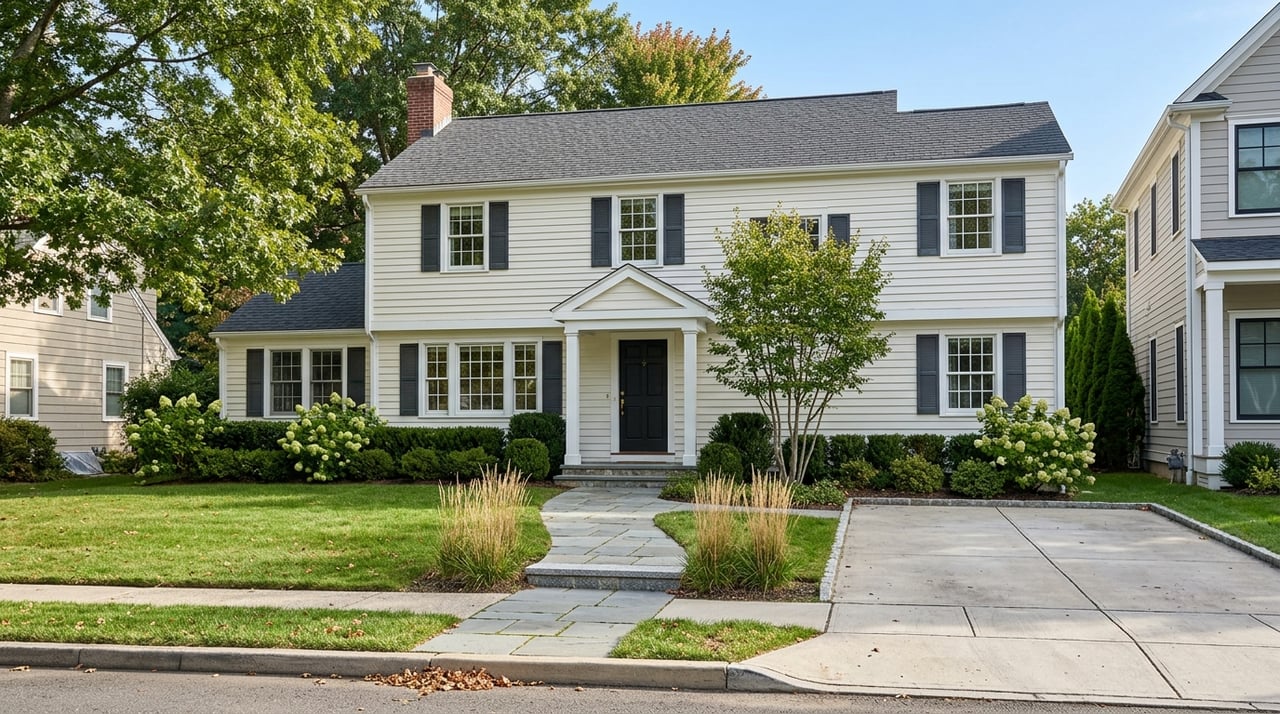
In Farmington, established areas often mean more than just older homes. They usually point to older streets, traditional house forms, and settings shaped by the town’s long history and preservation goals. That is an important distinction if you are comparing one part of town to another.
The Farmington Village Historic District was established in 1964, and the Unionville Historic District was established in 2008. Town historic materials highlight Unionville structures built before 1930, along with 19th-century and colonial-era homes dating from 1640 to 1799. In practical terms, established areas in Farmington often come with a stronger sense of age, variation, and architectural history.
Farmington’s zoning rules also support that identity. The town states that many older structures contribute to its charm and unique appearance, and that historic preservation supports the general welfare. So when you buy in one of these areas, you are often buying into a setting the town actively works to protect.
For many move-up buyers, established areas offer something hard to recreate in newer development. You may find mature landscaping, less uniform streetscapes, and homes with more individual character. In some cases, lots may also feel larger or more irregular than those in newer planned neighborhoods.
That appeal can be especially strong if you are moving from a starter home and want your next purchase to feel more distinctive. A home’s setting, lot shape, and architectural details can matter just as much as square footage. In Farmington’s current market, those features may also play into future resale appeal.
Established areas can also give you more variety to choose from. Instead of seeing one dominant home style repeated throughout a subdivision, you may see a broader mix of house ages, forms, and site layouts. For some buyers, that variety is a major part of the upgrade.
Character usually comes with extra homework. Older homes may have older systems, more maintenance needs, and more variation in updates from one property to the next. That means two homes with similar size can offer very different ownership experiences.
If a property sits within a historic district, exterior changes may require review. Farmington’s Historic District Commission notes that items such as fences, light fixtures, sheds, driveways, gutters, skylights, solar panels, roof and siding changes, windows, additions, generators, and demolition may require review. If you like to personalize your exterior quickly, that process should be part of your decision.
This does not make established areas better or worse. It simply means you should go in with a clear view of the trade-off. You may gain character and a mature setting, but you may also take on more process and more upkeep.
Newer areas in Farmington are often shaped by planned subdivision design and more recent zoning approaches. The town allows cluster and open-space subdivisions in several residential zones to preserve open space while allowing more flexible lot and building design. That gives you a useful clue about how many newer pockets are laid out.
Current cluster standards show minimum lot sizes and frontage of 30,000 square feet and 100 feet in R80 zones, and 15,000 square feet and 85 feet in R40, R30, and R20 zones. Some lots can be reduced to 12,000 square feet and, under stricter conditions, 10,000 square feet if buffer and open-space standards are met. In plain terms, newer areas are often more tightly planned than older neighborhood grids.
Farmington also has a Senior-Active Adult Housing Zone. These developments are designed for residents age 55 and older, must sit on at least 10 contiguous acres, and must be served by public sewer and water with underground utility wires. The regulations also require at least two parking spaces per unit, including at least one garage space.
Newer homes often appeal to move-up buyers who want a more predictable ownership experience. You may find more open layouts, attached garages, and a more current baseline for construction and energy performance. That can be especially attractive if you are trying to reduce immediate repair projects after closing.
Connecticut’s current State Building Code applies to permit applications filed from October 1, 2022, and is based on the 2021 IRC and 2021 IECC. That means newer Farmington homes generally start from a more current code and energy baseline than many older homes. Builder choices and individual property condition still matter, but the starting point is usually different.
Newer areas can also feel easier to compare. Homes may be closer in age, style, and layout, which can make your decision process more straightforward. If you value function, lower upkeep, and a simpler move, that consistency can be a plus.
The main compromise in newer areas is often the site itself. Because cluster and open-space rules allow tighter planning in some settings, lots may be smaller or feel more controlled than in older sections of town. Landscaping, setbacks, and overall neighborhood layout may reflect that planned approach.
You may also see less architectural individuality. In a newer pocket, finishes and floor plans may matter more than historic detail or one-of-a-kind curb appeal. For some move-up buyers, that is perfectly fine. For others, it can make a home feel less distinctive over time.
Some newer product types may also come with more rules. In active-adult or common-interest settings, you may gain convenience and lower exterior maintenance, but you should also expect a more structured environment. That balance works well for some households and not for others.
When you are deciding between established and newer areas, try to compare more than list price and bedroom count. In Farmington, lot design, year built, utility access, and local review rules can all affect your day-to-day experience. They can also affect what the next buyer values when it is time to sell.
A simple comparison checklist can help:
Farmington’s GIS mapping is especially helpful here. The town’s public tools let you review property lines, zoning districts, sewer and water lines, wetlands, flood plains, topography, assessment information, and recent sales data. The town’s revaluation materials also note that appraisers review year built, heating and cooling systems, construction materials, and interior and exterior condition.
Move-up buyers often focus on purchase price, but monthly carrying cost can tell a very different story. In Farmington, taxes are based on assessed value, which is 70% of market value, multiplied by the mill rate. That means two homes with similar asking prices may still land very differently in your monthly budget.
The town also notes that the 2026 revaluation will reflect October 1, 2026 market values, with the first tax bills using those assessments on July 1, 2027. If you are comparing established and newer areas, check the current assessment and think about how the total cost fits your plan. This is one place where careful upfront review can prevent budget stress later.
If you value character, a mature setting, and the feel of a home with a longer story, an established Farmington area may be the better fit. If you are comfortable with possible maintenance and added review steps for exterior changes, that trade-off may be worth it.
If you want open layouts, a more current code baseline, and lower immediate upkeep, a newer area may make more sense. You may give up some lot flexibility or architectural variety, but you may gain convenience and a simpler ownership experience.
In today’s Farmington market, there is no one-size-fits-all answer. The right move-up buy depends on how you balance layout, lot, maintenance, rules, and resale potential. If you want help weighing those details property by property, Robert Paskiewicz can help you compare the real costs and trade-offs before you make your move.
We pride ourselves in providing personalized solutions that bring our clients closer to their dream properties and enhance their long-term wealth. Contact us today to find out how we can be of assistance to you!