Rocky Hill CT Multi-Family Investment Property Guide
May 21, 2026
May 21, 2026
Buying an investment property in Rocky Hill can look simple on paper until you dig into zoning, rents, taxes, and local rules. If you are thinking about a two-to-four unit, an accessory apartment, or a value-add rental, you need more than a quick rent estimate. You need to know where opportunities actually fit, what the town allows, and which costs can change your numbers fast. Let’s dive in.
Rocky Hill is not a purely renter-driven market, and that matters when you size up an investment. Census QuickFacts shows an owner-occupied housing rate of 68.3%, while Apartments.com reports renters make up 39% of households. That mix suggests there is rental demand, but pricing and unit quality still matter because you are not operating in a dense urban renter market.
Current rent levels give you a useful starting point for underwriting. Apartments.com reports average apartment rent around $1,792 as of May 2026, with typical averages of $1,792 for one-bedrooms, $2,070 for two-bedrooms, and $2,787 for three-bedrooms. In practical terms, that puts many Rocky Hill rentals in a band where condition, layout, and parking can have a real impact on how quickly a unit leases.
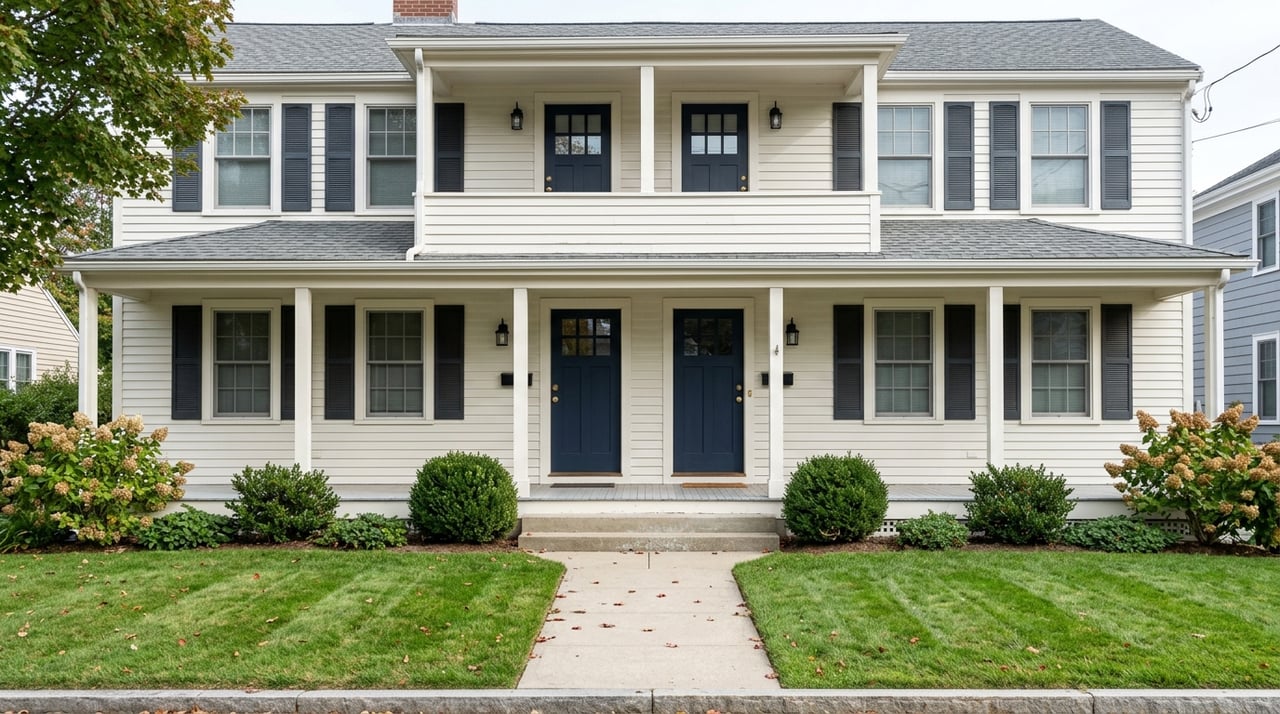
Rocky Hill’s 2022-2027 Affordable Housing Plan notes that much of the town’s multi-family inventory was built in the 1970s. The same plan says some of those units may not fit current needs as well as newer housing options. For you, that can point to value-add opportunities in older buildings that need functional updates rather than major redevelopment.
In many cases, the appeal is straightforward. A property with dated kitchens, older baths, worn common areas, or inefficient layouts may offer room to improve both rent potential and tenant appeal. In a town with existing rental demand but a more owner-leaning housing profile, well-finished units can stand out.
If you are hoping to build or convert freely in any residential area, Rocky Hill is more constrained than that. In the base R-20 and R-40 residential districts, the zoning table allows single-family dwellings and only multifamily housing developments already in existence as of February 1, 2006. That means many new multi-family plays are not likely to happen in standard base residential zones.
Instead, the more realistic paths are usually:
This is one of the biggest reasons Rocky Hill rewards investors who study local zoning early. The opportunity may be there, but it needs to fit the town’s actual framework.
For a smaller owner-operator, an accessory apartment may be one of the clearest entry points. Rocky Hill allows one accessory apartment on residentially zoned property under specific rules. The owner must live on the premises, the accessory unit cannot be separately metered, the lot cannot gain more than one additional dwelling unit, and the accessory apartment must remain within 30% of the main dwelling’s gross floor area.
That structure makes accessory apartments more practical for homeowners or live-in investors than for someone seeking a fully detached rental strategy. Still, if you want a lower-complexity way to add income to an owner-occupied property, this can be worth serious consideration.
Rocky Hill’s planning direction points toward housing in or near Town Center and on upper floors of business buildings. The zoning framework also supports mixed-use design in the Town Center district, with residential units on upper floors and a more pedestrian-oriented layout. For investors who are comfortable with more moving parts, this opens a different lane than the typical small rental acquisition.
The RC-Regional Commercial district is especially notable. A December 2022 zoning amendment allows office-to-multifamily or mixed-use conversion by special permit and site plan, with at least 10% of units required to be affordable. That creates a real path for repositioning older commercial properties, but it also brings more design, approval, and compliance complexity than buying a small existing rental.
In Rocky Hill, parking is not a side issue. The zoning regulations cap multifamily parking at no more than 1 space per studio or one-bedroom unit and 2 spaces per unit with two or more bedrooms. If you are evaluating a property with tight site conditions, awkward circulation, or limited parking layout, those factors can affect both usability and project feasibility.
There is also an EV requirement to know. New commercial or multiunit residential buildings with 30 or more parking spaces must include EV-charging infrastructure capable of supporting Level 2 or DC fast charging in at least 10% of required parking spaces. That may not affect every small investor, but it can matter on larger redevelopment or conversion projects.
Operating a rental in Rocky Hill comes with town-specific rules that should be part of your due diligence. One of the most important is the Fair Rent Commission. The town states that the commission can receive and investigate rent complaints, hold hearings, issue subpoenas, order rent reductions for certain reasons, address retaliation complaints, and suspend rent payments when rental housing fails local or state health and safety requirements until compliance is achieved.
That does not mean you should avoid the market. It means you should operate carefully, maintain the property, document your decisions, and understand that local oversight is part of the landscape.
Permits are another key item. Rocky Hill’s Building Department says new construction, alteration, or repair of an existing building requires the relevant building, mechanical, plumbing, or electrical permit. If you are buying a value-add property, you should budget not only for renovation costs, but also for the permit process and possible post-work inspection impacts.
Rocky Hill’s last revaluation was in 2023, and assessments are set at 70% of market value. The current 2025-2026 mill rate is 30.24, which works out to roughly 3.024% of assessed value before exemptions. Using the town’s example, a property assessed at $350,000 would owe about $10,584 in annual town tax.
This matters for investors because improvements can raise both rents and your tax basis. If you complete a meaningful renovation, your long-term operating costs may shift, so your underwriting should leave room for that possibility.
There is also an annual income and expense reporting requirement for rental real property under CGS 12-63c. Rocky Hill’s filing instructions say a missing or false filing can trigger a 10% increase in assessed value. That is the kind of local administrative detail that can surprise a first-time landlord.
Trash service can also change your numbers. Town curbside service covers single-family homes, condos, and multi-family dwellings of four or fewer units. Apartment buildings must secure their own private hauler, so larger properties need a separate waste cost line in your operating budget.
A simple underwriting screen should begin with achievable gross rent, then move through realistic expenses. You will want to model:
For rent assumptions, current market data suggests many units fall in roughly the $1,700 to $2,800 range depending on size and finish. Apartments.com reports average rents of $1,528 for studios, $1,792 for one-bedrooms, $2,056 for two-bedrooms, and $2,787 for three-bedrooms, while Zillow’s average rent index for Rocky Hill was $1,818 in April 2026 and up 2.7% year over year.
Vacancy should be modeled conservatively. Because Rocky Hill is more owner-dominant than renter-dominant, lease-up may be more sensitive to unit condition, layout, parking, and pricing than in a denser rental market. If your numbers only work under a best-case lease-up, that is a sign to revisit the deal.
For older small multi-family properties, the strongest value-add case is often functional improvement. Think updated kitchens and baths, cleaner common areas, better lighting, improved energy performance, and more efficient parking or site circulation. Those upgrades line up with the town’s own observation that many existing multifamily units were built decades ago and may not match current needs.
For mixed-use or commercial conversion projects, the upside is different. In those cases, value may come from creating legal residential density in a district that already contemplates upper-floor housing, mixed use, or conversion. Those opportunities can be compelling, but they require more patience, more planning, and close attention to approvals.
Rocky Hill can make sense for the right investor, especially if you focus on realistic plays instead of trying to force a concept that zoning does not support. Existing small multi-family properties, owner-occupied accessory apartment setups, and select mixed-use or conversion opportunities are usually the clearest paths. The key is to match the property to the town’s rules and then underwrite with discipline.
If you are weighing a purchase, renovation, or possible sale of an investment property in Rocky Hill, working with a local team that understands both property value and financing can save you time and help you avoid expensive blind spots. To talk through strategy, pricing, or your next investment move, connect with Robert Paskiewicz.
We pride ourselves in providing personalized solutions that bring our clients closer to their dream properties and enhance their long-term wealth. Contact us today to find out how we can be of assistance to you!